
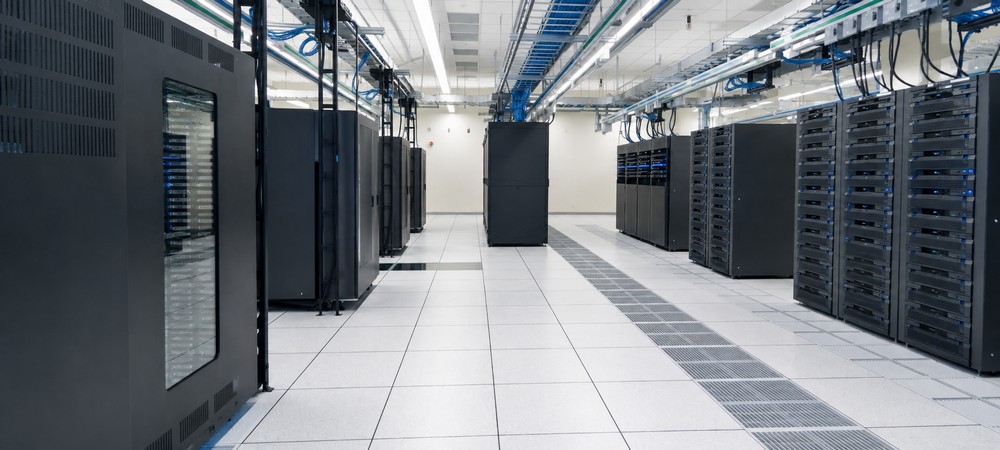
Tier III data center design and construction
SmartERA-‘s team of experts provides end-to-end services for the design and construction of Tier III data centers. From on-site surveys through detailed electrical and mechanical design to construction, system integration, and commissioning, our project office coordinates every step, ensuring N+1 redundancy, dual power paths, and maintainable infrastructure.
Reliable. Redundant. Business continuity.
Designing a Tier III data center is now a fundamental requirement for critical infrastructures: guaranteed uptime, maintainable infrastructure, and N+1 redundancy ensure business continuity. Our design approach combines dual power paths, redundant cooling, and scalable, easily maintainable distribution systems. We undertake every project from on-site survey through system integration and detailed testing to long-term support.
Tier III design
Based on on-site surveys, capacity analysis, and risk assessment, we design a Tier III-compatible architecture for your data center. We define power and cooling requirements, design N+1 redundancy, and identify options for creating maintainable infrastructure — all with operational reliability and future scalability in mind.
N+1 redundancy and maintainable infrastructure
Our design philosophy centers on N+1 redundancy and maintainability. We build architectures that guarantee operation even if a component fails, and where maintenance can be performed without service interruption. This significantly increases business continuity and reduces operational risks.
Construction and commissioning
We undertake full construction: electrical and mechanical works, UPS and generator integration, installation of cooling systems, and commissioning according to Tier III testing and documentation requirements. During handover we perform functionality and redundancy checks and fully validate the system together with operational procedures.
TIER III DATA CENTER: N+1 REDUNDANCY AND BUSINESS CONTINUITY
A modern data center consists of multiple elements: a reliable dual power path, UPS and generator backup, precise cooling systems with N+1 redundancy, and sophisticated distribution and monitoring. In design we take into account your business requirements, scalability, and future expansion needs, creating a data center that is secure, maintainable, and guarantees business continuity.
Dual power path and grid connection
Designing and implementing a dual power path is fundamental for Tier III: two independent supply routes, separate distribution units, and protection schemes ensure that a grid issue does not cause service interruption. We also assist in mapping grid connection requirements and handling necessary permits.
Redundant cooling and HVAC solutions
Our HVAC components are designed in N+1 and redundant configurations to guarantee desired temperature and humidity levels. We apply multiple cooling architectures to optimize efficiency and availability, including both local and central solutions.
N+1 redundancy for enterprise needs
In enterprise environments we develop scalable N+1 configurations that support simultaneous operation of multiple server and storage systems. In design we consider fleet growth, energy efficiency, and monitoring requirements, and integrate automatic switchover and management solutions.
Tier III compliance and certification
During design to Tier III standards we prepare the required documentation and assist with the certification process. We align data center construction and operational procedures with relevant regulations so you can be confident the infrastructure meets high-availability requirements.
System integration and monitoring
We integrate data center management and monitoring systems that provide real-time information on energy consumption, temperature, availability, and alarms. Control and reporting functions support operations and informed decision-making.
UPS, generator and protection
The reliability of a data center depends on properly sized UPS and generator systems and protective devices. We design the necessary uninterruptible power architectures, generator provisioning, and overcurrent and fire protection integration so critical systems remain operational.