
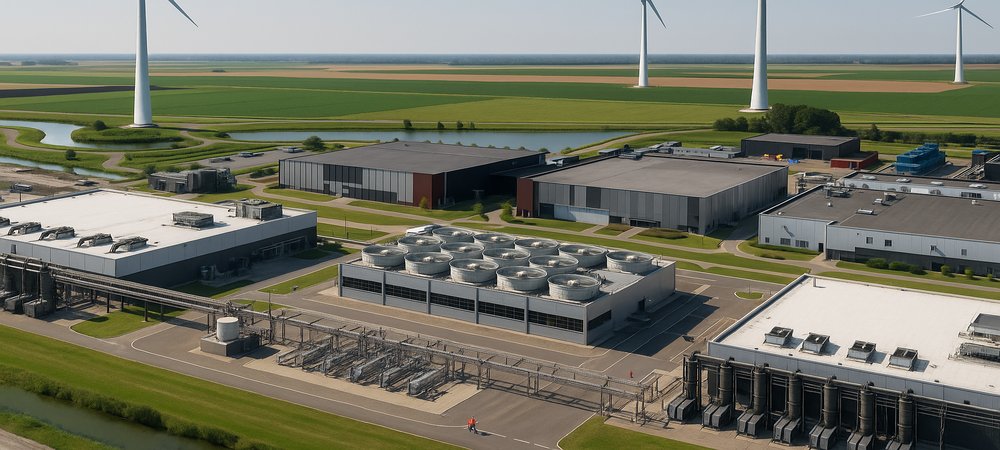
Mission-critical infrastructure
SmartERA provides comprehensive mission-critical infrastructure design and implementation for industrial, enterprise and data center environments to ensure your business-critical systems operate continuously and securely.
Reliable. Fault-tolerant. Business-critical infrastructure.
When designing and implementing business-critical infrastructure, our primary objective is to ensure continuous availability and to establish a fault-tolerant architecture. From the site survey onward, our company develops redundant power and critical cooling concepts, integrates monitoring systems and defines the required SLAs. Our services include detailed risk analysis, recommendations for business continuity measures, and technical solutions that enable scalable future expansion. We manage every project from design through commissioning — and on to ongoing support and maintenance — optimized for system integration between electrical, mechanical and IT systems.
Critical systems design
We perform on-site surveys, capacity and risk assessments to determine the optimal architecture; we propose redundant systems and fault-tolerant designs, taking into account the availability requirements of business-critical applications.
Redundant power supply and fault-tolerant design
We design multi-level redundancy and backup sources: UPS systems, battery energy storage, automatic transfer switches (ATS), and integration of diesel generators. N+1 or active/active fault-tolerant configurations aim to prevent outages and maintain business continuity; system sizing is based on the load profile and SLA requirements.
Installation, commissioning and system integration
Installation and commissioning are carried out by our experienced installation team, covering electrical connections as well as integration of cooling and monitoring systems. Before handover we perform thorough functional and load tests, document the configurations and provide operational recommendations; training for on-site staff is available on request.
MISSION-CRITICAL INFRASTRUCTURE – SAFETY, REDUNDANCY, MONITORING
Business-critical infrastructure consists of several tightly integrated elements: redundant power (UPS, generators, battery storage), critical cooling and climate control, precise measurement and monitoring systems, and selective protection. In design we create fault-tolerant architectures covering every component, keeping future expandability and maintenance simplicity in mind. Our goal is to deliver solutions that minimize the risk of downtime and meet your business requirements.
Business-critical systems design
Our engineers carry out detailed on-site and network surveys, define the requirements of business-critical systems, and develop fault-tolerant architectures that meet availability and SLA expectations.
Redundant power supply and backup sources
We design and integrate UPS solutions, generators, automatic transfer switches and battery energy storage; we ensure compatibility of transmission and protection schemes and the required N+1 redundancy so the power supply operates fault-tolerantly.
Monitoring systems and remote monitoring
We build monitoring and reporting systems that monitor energy, cooling and security parameters in real time, send alerts and enable remote intervention to quickly resolve incidents.
Critical cooling and environmental control
For data centers and sensitive technical areas we design precision cooling systems, redundant air-conditioning units and environmental controls that guarantee continuous temperature and humidity regulation even in the event of partial failures.
Access management and billing
We integrate user identification, metering and reporting systems so that access management, consumption measurement and cost accounting are transparent and secure even in a commercial environment.
Electrical network and protection
Reliable operation is founded on a properly sized and protected electrical network. We verify connection capacity, cabling and distribution equipment, and design selective protection and fault-handling to ensure the system complies with applicable technical regulations and long-term operational reliability.